
Bachelor of Informatics
The Bachelor of Informatics focuses on developing skills in information technology, such as programming, data processing, and digital systems development. Students are equipped with analytical and technical skills to create innovative solutions and are prepared for careers in the technology industry and various other sectors.
Informatics Lecturer

Prof. Dr. Budi Murtiyasa, M.Kom.
Expert Lecturer

Prof. Heru Supriyono, Ph.D.
Expert Lecturer

Bana Handaga, Ph.D.
Expert Lecturer

Arsyadany G. Akmalaputri ST., MM. QRGP, CRGP.
Expert Lecturer
Student Centered Learning
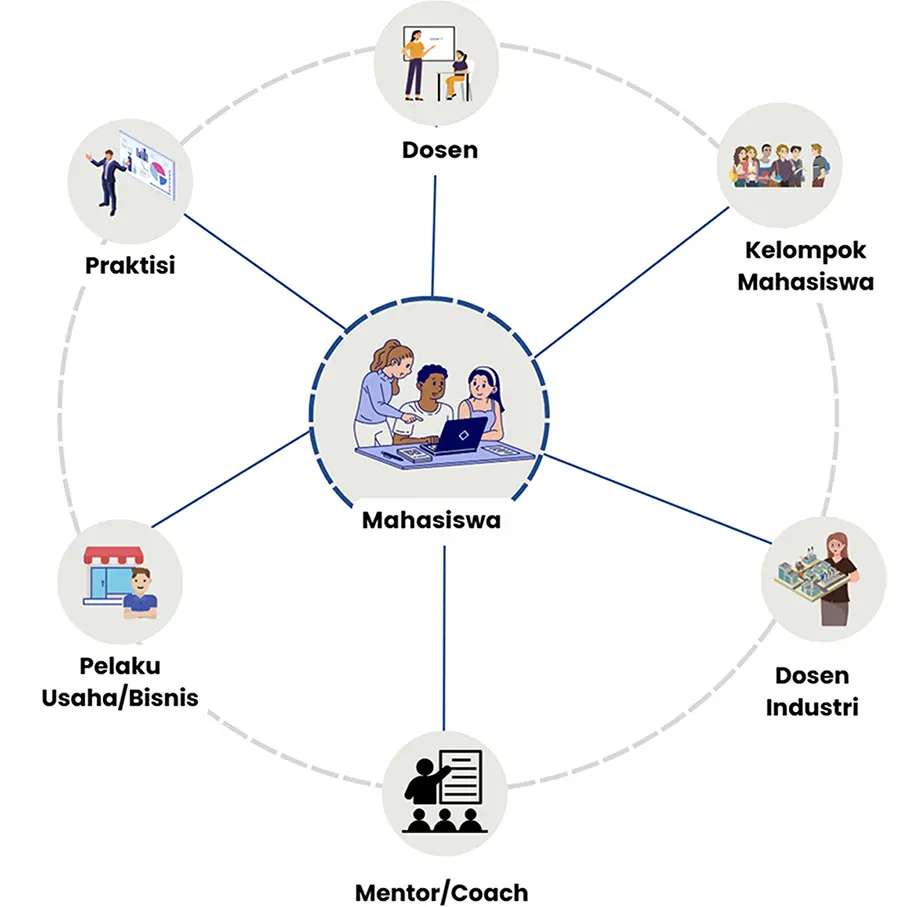
BIM University implements a Student-Centered Learning concept that allows students freedom in their learning. Students are not limited to lectures, but also engage in hands-on Project-Based Learning taught by industry practitioners aligned with their study programs.
Learning Journey of Informatics
Foundations of Computing and Mathematical Thinking
- Introduction to Programming and Algorithmic Thinking
- Calculus and Linear Algebra for Computing
- Computer Fundamentals and Digital Literacy
- Academic Communication and English Proficiency
- Civic, Religious, and Ethical Foundations
Semester 2
Core Computational Theory and System Foundations
- Discrete Mathematics and Mathematical Logic
- Computer Architecture and Organization
- Algorithms and Data Structures
- Statistics for Computing
- Academic and Ethical Development (Pancasila and Islamic Studies)
Semester 3
Systems Development and Core Computing Technologies
- Algorithm Analysis and Computational Complexity
- Object-Oriented Programming
- Operating Systems and Computer Networks
- Database Systems
- Parallel and Distributed Computing
- Numerical Computation
Semester 4
Software Engineering and Intelligent Systems
- Software Analysis and Modeling
- Web and UI/UX Design
- Machine Learning and Artificial Intelligence Fundamentals
- Digital Image Processing
- Information Technology Law and Policy
- IT Project Management
Advanced Computing and Emerging Technologies
- Web Programming and Network Management
- Internet of Things (IoT)
- Artificial Intelligence Applications
- Information and Network Security
- Computer Forensics
- Software Engineering Practices
Semester 6
Data-Driven Technologies and Professional Preparation
- Big Data and Cloud Computing
- Research Methodology in Computer Science
- Ethics and Professional Practice
- Industrial Internship (Practical Work Experience)
- Elective/Specialization Courses
Semester 7
Innovation, Development, and Community Engagement
- Service-Oriented Programming
- Digital Startup Development
- Software Engineering Project
- Game Design and Interactive Systems
- Proposal Seminar
- Community Service Program (KKN)
- Elective/Specialization Courses
Semester 8
Final Project and Research Completion
- Undergraduate Thesis / Final Project
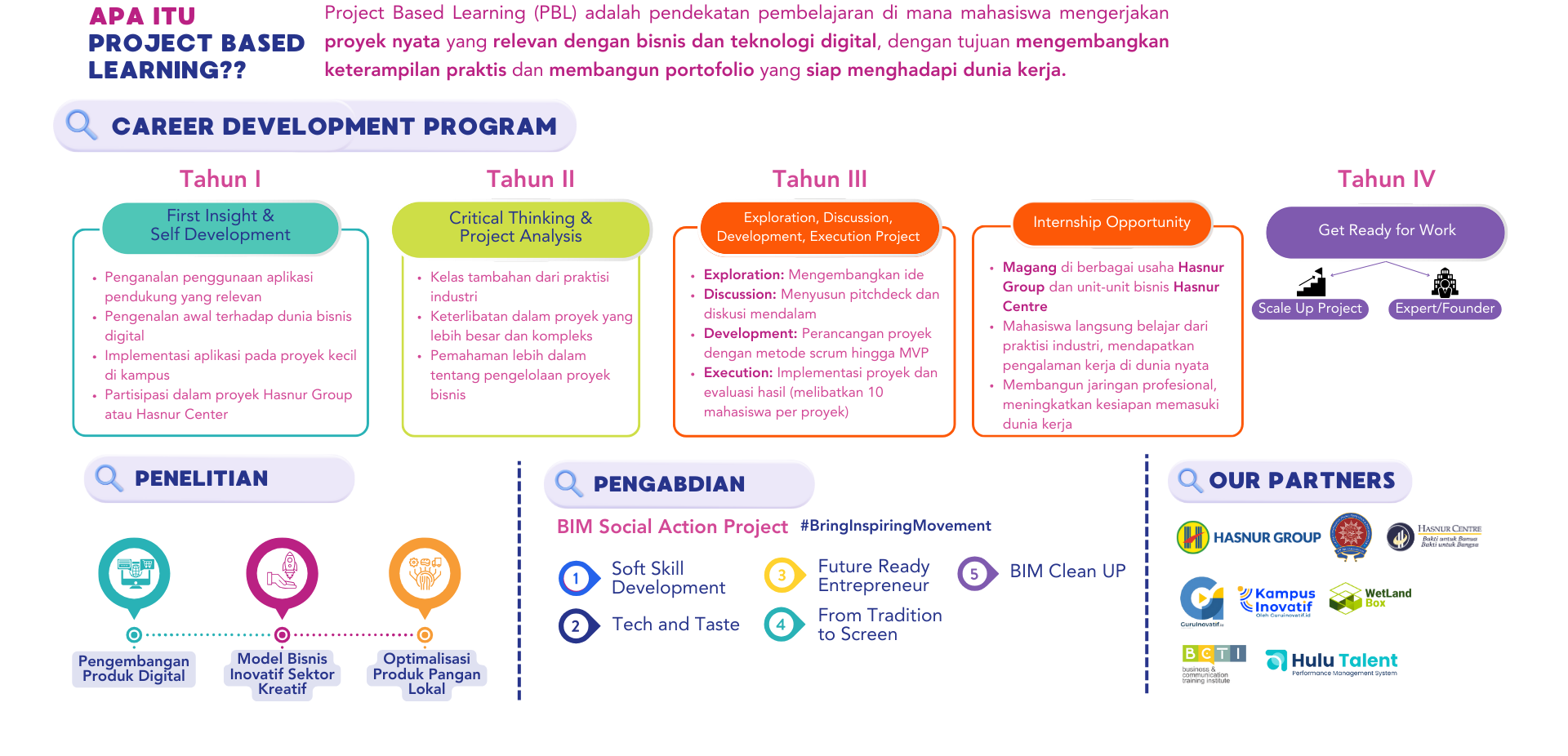
Student Journey with Project Based Learning
Career Prospects
Graduates of the Informatics Study Program have very broad job prospects in the digital era, such as:



Facilitation
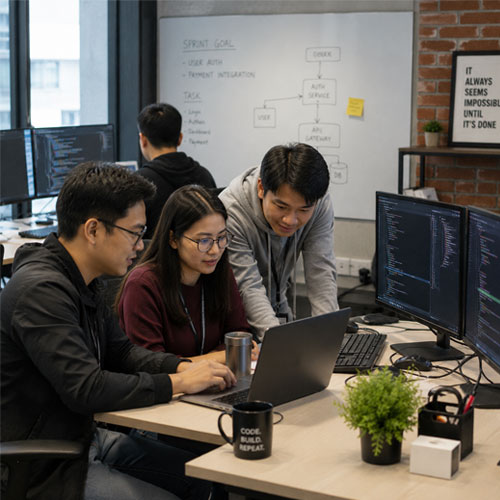
Our facilities in every learning process to become fully connected as a global University.
Let’s talk about on demands
Click here to Estimate tuition and fees